Features
Contact
AOL IM

2003 Milk Plus Droogies

Best Picture
Kill Bill Vol. I

Best Director
Quentin Tarantino, Kill Bill Vol. I

Best Actor (tie)
Johnny Depp, Pirates of the Caribbean

Best Actor (tie)
Bill Murray, Lost in Translation

Best Actress
Uma Thurman, Kill Bill Vol. I

Best Supporting Actor
David Hyde Pierce, Down With Love

Best Supporting Actress
Miranda Richardson, Spider

Best Screenplay
Sofia Coppola, Lost in Translation

Best Foreign Film
Irreversible

Best Cinematography
Harris Savides, Gerry

Members' Marquees

Critical Contacts

Lobby Reading

The Video Store

Reel Resources

The Blog Bijou

-213
-Admit One
-Artistic Delusions
-Belligerent Bunny's Bad Movie Shrine
-Beware of Blog
-The Brain Drain
Biancolo Notes
-The Big Ticket
-Bitter Cinema
-Black & White World
-Bull Durham's Hot Corner
-Brewed Fresh Daily
-Camille's Film Journal
-Chiragdshah
-The Chutry Experiment
-Cineblog
-Cineblog (II)
-Cine Club
-Cinecultist
-Cinegraphic.Net: The Avante-Garde Film and Video Blog
-Cinema 24
-CinemaMinima
-Cinema News
-Il Cinema Secondo (Italian)
-Cineaste (Russian)
-Cinematix
-Cinema Toast
-Cinetrix
-Columbina
-Concentrated Nonsense
-Confessions of an Indie Filmmaker
-Cult Movies I Dare You to Watch
-Cutting to the Chase
Cybersam
-Cynthia Rockwell's Waiting Room
-The Daily Despair
-The Daily Digest
-Day for Night
-Delta Sierra Arts
-Dinky's Docket
-Distorting the Medium
-Donald Melanson On Movies
-Electric Movies
-Fade In: Blog
-Feeling Listless
-Filmfilter (German)
-Filmgurlland
-FilmingtonBlog
-Filmtagebuch (German)
-Film Talk
-Five Easy Pieces
-Fluxblog
-Frank Booth
-Fringe
-A Girl and A Gun
-Glazed Donuts
-Greg.org
-GreenCine Daily
-Harlequin Knights
-Harrylimetheme
-He Loved Him Some Movies
-The Hobo Reviews
-Hot Buttered Death
-Iggy's Movie Review Weblog
-Iguano Film Blog
-In Development
-Indigoblog
-Ionarts
-Ishbadiddle
-Japanese Films' Journal
-Joe Sixpack's Film Blog
-Joe's Weblog & Film Project News
-Junk for Code
-Kumari's Movie Blog
-Lights Out Films
-Like Anna Karina's Sweater (Filmbrain)
-Listen Missy
-Loebrich.org
-Magnolia Girl
-Marley's Ghost
-Media Yenta
-Michael I. Trent
-Moovees.com
-Moov Goog
-Motime Like the Present
-MovieBlog
-Movie Boy
-Movie Criticism For the Retarded
-A Movie Diary
-The Movie Generation
-Moviehead
-The Movie Marketing Blog
-Movie Retard
-The Movie Review
-MovieTawk
-Moving Pictures
-Nando's Blog
-Netflix Fan
-Odeon
-Onethumbsideways
-Or Kill Me
-Out of Ambit
-Out of Focus
-Paolo - Cinema's Radio Weblog (Italian)
-Pigs and Battleships
-Plot Kicks In
-Pop Culture Junkies
-Popthoughts
-The Projector
-Qwipster's Movie Reviews
-Rashomon
-Rawbrick.Net
-Reel Reviews (Podcast)
-Reviews, Reviews, Reviews
-Salocin.com
-SciFiDaily
-The Screening Room
-Screen Watcher
-Shikaku
-Short and Sweet
-The Silver Screen
-Solipsist
-Stinky Cinema
-Sunset Blvd
-Tagline: A Movie Weblog
Talking Pictures
Tea for One
-Tofuhut
-Tom Vick's Asian Cinema Blog
-Trailer Park
-Truly Bad Films
Waste of Tape
-Wayne's Movie Blog
Whippin Picadilly
Wittgenstein's Bunnies
-Yay! Movies!
McBain Recommends
-Harry Potter and the Prisoner of Azkaban
-Eternal Sunshine of the Spotless Mind
-Kill Bill vol 2
Shroom Recommends
-Top 20 List
-Brothers
-Head On
-Moolade
Joker Recommends
-Top 20 List
-House of Flying Daggers
-The Aviator
-Bad Education
Yun-Fat Recommends
-Eight Diagram Pole Fighter
-Los Muertos
-Tropical Malady
Allyn Recommends
-Eternal Sunshine of the Spotless Mind
-Songs from the Second Floor
Phyrephox Recommends
-Top 20 List
-Design for Living (Lubitsch, 1933)
-War of the Worlds
-Howl's Moving Castle
Melisb Recommends
-Top 20 List
-The Return
-Spirited Away
-Spring, Summer, Fall, Winter...And Spring
Wardpet Recommends
-Finding Nemo
-Man on the Train
-28 Days Later
Lorne Recommends
-21 Grams
-Cold Mountain
-Lost in Translation
Merlot Recommends
-Top 20 List
-The Man on the Train
-Safe Conduct
-The Statement
Whitney Recommends
-Femme Fatale
-Gangs of New York
-Grand Illusion
Sydhe Recommends
-In America
-Looney Tunes: Back In Action
-Whale Rider
Copywright Recommends
Top 20 List
-Flowers of Shanghai
-Road to Perdition
-Topsy-Turvy
Stennie Recommends
Top 20 List
-A Matter of Life and Death
-Ossessione
-Sideways
Rodney Recommends
Top 20 List
-Chicago
-The Pianist
-Talk to Her
Jeff Recommends
-Dial M for Murder
-The Game
-Star Wars Saga
Lady Wakasa Recommends
-Dracula: Page from a Virgin's Diary
-Dr. Mabuse, Der Spieler
-The Last Laugh
Steve Recommends
-Top 20 List
-Princess Raccoon
-Princess Raccoon
-Princess Raccoon
Jenny Recommends
-Mean Girls
-Super Size Me
-The Warriors
Jason Recommends
Top 20 List
-Old Boy
-Million Dollar Baby
-Head On
Lons Recommends
-Before Sunset
-The Incredibles
-Sideways

Powered by Blogger Pro™


links open windows

(c)2002 Design by Blogscapes.com


The Blog:
Saturday, October 25, 2003
 

Elephant


[Consider this a companion review to Phoxy's printed below; it's slightly more critical (but not by much -- I still liked it) and analayzes a different aspect of Van Sant's achievement]

SPOILERS AHEAD, PROCEED WITH CAUTION

Gus Van Sant burst through the forefront of American independent cinema with Gerry, a bold film with such undeniable power that its fans were wondering how he could possibly follow it up. Then came this year's Cannes Film Festival, where Van Sant premiered the film he breezed through production last winter and quickly prepared for its world premiere in May. Elephant won a rare double prize for Best Picture (Palm d'Or) and Best Director, cementing Van Sant's comeback as a bona-fide movement towards a vanguard other independent directors are cowardly avoiding.

Unfortunately, Elephant isn't nearly the pure masterpiece Gerry is, nor does it come equipped with on-screen talent as assured as Matt Damon and Casey Affleck. But after a couple viewings, it's clear that whatever its flaws, the film is too unique to dismiss, too perplexing to simplify, and too thoughtful to despise. A meditation on high school violence in general and shooting incidents like Columbine in particular, Elephant is stylistically similar to Gerry in that its camera is observational rather than in-your-face, and the focus is on tone and atmosphere rather than narrative and character development. Initially, this seems like a problem because while Gerry's content was its form, here the material is far more immediate and "message-y," apparently demanding answers rather than vacant observations.

And indeed this problem does create a dissonance between the relaxed cinematic approach and the bloody carnage depicted within the frame. But if one is willing to concede that Van Sant's goal, however irresponsible and negative, is to pose every question and answer none of them, then in fact the style becomes a vital way to process the disturbing imagery. Van Sant is no action director, and the massacre that dominates the film's final 15 minutes is handled with an almost clumsy confusion and lack of connection. Although we've spent over an hour inside this school, we often can't tell where we are, who is located where, and what the fates of some victims will be. But this isn't a concern to Van Sant. Since his film doesn't profess to provide an exhilarating release, glorify any of its actions, or convey a conventional narrative, his directorial eye is free to zero in on the details that give the film its ultimate cumulative power.

Elephant steadfastly refuses to give us background on characters or explain their actions. It observes a handful of high school students over the course of the day, and uses his now-standard long-take master-shot motif to show how different people respond uniquely to the same stimuli. Nowhere is this more important than in the characterization of the two killers. What might go unnoticed by many viewers is how different Eric and Alex are. Alex is polite to his family, he's a skilled piano player, and he quotes Shakespeare. Eric is rude, profane, stupid, and spends his time playing video games (the Gerry in-joke involving the video game is so hilarious that it detracts from the film significantly) and asking moronic questions about videos ("Is that Hitler?"). By showing that two radically different personalities can befriend each other and commit such heinous murders, Van Sant is asking how anyone can generalize the profile of a high school shootist.

Furthermore, we have a character named John (played by John Robinson -- all of the students are amateur actors playing characters with their own names except, inexplicably, the nerd girl Michelle) who has a drunk father and gets unfairly punished by school administrators. Conventional stereotype would have the misunderstood son of an alcoholic father turn into the killer, but we see John doing one responsible thing after another, turning protective, and greeting each familiar face at school with an optimistic, friendly exchange.

Also note the characters of Michelle and Alex. Both are outcasts, both bullied by their peers (Michelle is teased in the locker room for her granny panties and Alex is sprayed with spitballs during chemistry class), but one turns killer and one turns victim. Again Van Sant poses the question -- how can you generalize that bullies or victims are killers or not? For yet another duality, note Alex and Eli. Both are creative -- Alex with his piano and detailed sketches, and Eli with his photography (and Van Sant spends a good amount of time showing both boys at work) -- yet once again, Alex is the bad seed and Eli isn't. Van Sant's implication is that there's no easily identifiable source or characteristic that allows us to predict which kids will bring a gun to school and go to town. (Eli is so likable in fact, and his interaction with John (shown three times thanks to Van Sant's clever chronology) is so realistic and endearing, that we'd actually rather see a film about these two kids than suffer through the tragic third act.) For a final example, look at Benny and Acadia, who meet in a classroom over the dead body of one teen. Acadia leaps out the window to safety, while Benny is overtaken with an irresistible curiosity to search the school, seek out the gunmen, and look them in the eye even if it means his death.

Aside from the merits of these profound actions, Van Sant's film also benefits once again from gorgeous visuals thanks to ace DP Harris Savides. Savides uses Portland, Oregon's lush greenery and open skies to create a dichotomy between the joy teenagers have when they're out in nature and the portentous doom of the interiors. Watch the shot where the jock leaves a pleasant football field and crosses through delighted, active students everywhere for the controlling, imposing institution of the school, a gray, monolithic monster interrupting the frame with ominous weight. Then there's the shot where Michelle enters the empty gymnasium and Savides's low-angled camera lets her march through the dark wooden floors and echoing silence. Characters often look skywards (Michelle in appreciation of fresh air, Alex in appreciation of his own insidious plans of massacre) as do Van Sant's visuals, almost declaring the director's fundamental atheism -- the sky offers no judgement, no answers, no guidance. Only passing clouds and fading light.

A few things do stand out as problematic. Aside from the aforementioned shaky handling of the massacre and woeful lack of screen time granted to John and Eli, there's the amateur actor problem of kids occasionally looking into the camera or moving stiffly through the frame. Scenes like the three snotty girls who vomit up their salad lunches feel contrived, and the shot of the killers watching a Hitler video tips the scales too much with a cheap cliche. But Elephant is a film that sticks with you, and even if it's a disappointment after the frighteningly brilliant Gerry, Van Sant has proven that he is now a director of considerable artistic vitality and intelligent discourse, and an American voice to be reckoned with.


Friday, October 24, 2003
 
from merlot:

Orange County (Kasdan)

I thought this was quite a blast. Jack Black was very funny. The rest of the major players held up their end of things, for the most part. Some of the minor parts were handed to great veterans (Catherine O’Hara, John Lithgow, Kevin Kline, Lily Tomlin). It is a good thing to find a comedy that actually makes me laugh. Is it full of clichés, yes, but so are lots of other films that are dull as mud.


The Weight of Water (Bigelow)

This film is confusing and a bit of a mess, but I liked it a lot anyway. Sean Penn is out of place here looking like a cross between Ace Ventura and George Hamilton. He is not a good choice for this character, but he does an adequate job. There are two stories here: a modern one with : a writer, his wife, his brother and the lover. They are going to check out the location of a long ago murder. The second story is about the murder itself.

I really liked the way Bigelow shot the two stories. She is one of those hit-or-miss directors, but mostly I like her. The heart of the film is Sarah Polley who is one of my very, very favorite actresses. She is terrific in this, as always. Elizabeth Hurley is much on display here, for those of you that are interested in such things.


The Pianist (Polanski)

This is a great film. I loved the cinematography and the fact that the protagonist is not a hero, knows it and does not make excuses for the fact. Neither does the film. Adrien Brody was heart-breaking in the role – all cocky and on top of the world in the beginning ; resigned to his survival at the end. Polanski did an incredible job. I never know what to expect in a film that is so highly proclaimed as great. This one deserves all the praise it has gotten.


Down With Love (Reed)

I loved the look of this film and was very impressed with how much work went into it. However, I really can’t say that the film impressed me that much overall. It is incredibly detailed and very cute. I’m not that turned on by cute (I wasn’t that thrilled with the zany comedies that this film is based on). Zellweger was a major drawback for me. I don’t like to be critical of physical appearance, but the whole premise of the film is that she is irresistible. She is not. In fact, in one crucial scene she is quite unattractive (was this the point here in this scene? She was sooo badly lit, that I can’t believe that it wasn’t on purpose). And why would any director put someone who is only skin and bones in a backless dress? I really do like her very much as an actress and I’m looking forward to Cold Mountain. She was also excellent in A Price Above Rubies, Chicago and Bridget Jones. Doris Day was just too perky for words but she was also unbelievably beautiful and could get away with it better.


The Royal Tenenbaums (Anderson)

I loved this. Not being a big fan of Bottle Rocket and Rushmore, I had avoided seeing it. Anderson has proved himself to be an obsessive director. The detail work on this film is astounding – everything is perfect. The oddities never overshadowed the emotional story, they carried the story along further. Gene Hackman was great (as he is in everything he does).


Tully (Birmingham)

I highly recommend this film. It was shown at some festival as The Truth About Tully. It is basically about two brothers (one is a lothario, the other is the “serious” one) raised by their father on the family farm. The dad gets a letter about a $300,000 lien on the farm, which he has no idea about where it came from. Into the mix is thrown a neighbor girl who is back from school (she is friend to one brother, and is interested in the other). There’s not much dialog here – which I think is it’s grand achievement. I think some films fill space with words because the writer and director don’t trust the audience’s intelligence or the actors’ abilities to deliver the goods without stating the obvious (a major flaw in D.G. Green’s works – IMO – along with plot contrivances). I think people who like Green’s films will find much to like here. There isn’t a lot that’s new or different, it’s just that I liked the way it was delivered (note – it is not free of plot contrivances either, I just happen to like the ones here better).


La Silence de la Mer (1945 - Melville)

German officer/intellectual is assigned living quarters in a French farmhouse. The father and daughter who live there decide that the best way to deal with the reprehensible situation is not to speak to the officer, ever. So HE talks, on and on about everything: his childhood, philosophy, dreams, music etc. He believes in the high ideals of the Third Reich and thinks Germany will re-emerge as the world leader of culture and re-assert itself into a place of intellectual prominence. Until he visits Paris and gets a good dose of Nazi reality. Totally demoralized, he finally understands. Poignant film. Ever since seeing La Samurai (gorgeous film), I’ve been trying to track down all of Melville’s films. I came upon this one quite by accident in a library. I’m hoping that they release Bob le Flambeur on DVD soon, as The Good Thief was very good and Melville’s version can only be better.


Orphée (1950 - Cocteau)

Very dream-like. If you can leave your Matrix-jaded sensibilities behind you as you watch this, it can be a truly mesmerizing experience. It took me a little while to get into it. I’ve always liked Cocteau and I was quite taken with this film version of the legend of Orpheus. Death has never before or since looked so stylish or seductive.


Samurai 3 : Dual at Ganryu Island (1967 – Inagaki)

This was the final film in the Samurai Trilogy by Inagaki. I loved Samurai 1: Musashi Miyamoto and for my taste, is the best samurai film I’ve ever seen. The cinematography is fabulous (wide screen a must for these). I think that Samurai 3 is now my second favorite – it has the classic showdown between the ‘best of the best’ in it. Mifune was goofy and unkempt in 1 (and this is partially why the film has logged itself in the #1 slot). He turns in a fully rounded, mature performance in 3. He is all amused self-confidence. I found a lot here in common with Eastwood’s reluctant gunmen. If you haven’t seen these, please make the effort, as they are wonderful films (both in the story telling and the look of the films). Samurai 2 is not in the same class as 1 & 3, the character development is less interesting – look at it as a bridge from 1 to 3. Now, if I can only find Samurai Rebellion by Kobayashi, I might have a challenger for #1 (I am just starting on his Human Condition series, that may take me awhile to get thru).


Wednesday, October 22, 2003
 

Question of the Week


Well, it's time to take a break from the polling, and turn to a question that is more of a lark. Did you ever think that you could do better than the suits in Hollywood? Well, here's your chance, hypothetically of course:

You are a producer at Milk Plus studios, and it's time to get your baby out of development hell. Pick a story for development; because we want people to comment on your choices, we unfortunately can not use original stories, but books, plays, comic books, TV shows, remakes, etc. are all up for grabs. After you have picked your property, assemble the talent (make sure they are living talent) that you would want in your movie, and assign them specific roles, giving justification for each choice. You have to pick a director and the main cast, but if you want, you can also select a writer, DP, composer, etc., but for each additional choice, you have to provide justification. Since Milk Plus Studios is not in the business of throwing money down a hole, also tell us why you think your project will make money (or at least, why it won't lose much money).

Again, the question of the week is open to any blog member or reader, but you are allowed to only answer the question once. Since we're all taking the roles of back-stabbing, bottom-feeding Hollywood producers, feel free to discuss each others selections.


The Unofficial Milk Plus Canon: 1995-1999


Well, our second little poll is officially finished, and the votes have been tabulated. Thanks to everyone who has participated. Without further ado, here are the results of the Unofficial Milk Plus Canon: 1995-1999:

10. It's a Two-Way Tie:
The Big Lebowski (d. Joel Coen, 1998) - 13 points
Taste of Cherry (d. Abbas Kiarostami, 1997) - 13 points

9. The Sweet Hereafter (d. Atom Egoyan, 1997) - 15 points

8. Toy Story (d. John Lasseter, 1995) - 16 points

7. It's a Two-Way Tie:
Being John Malkovich (d. Spike Jonze, 1999) - 23 points
LA Confidential (d. Curtis Hanson, 1997) - 23 points

6. It's a Two-Way Tie:
Hana-bi/Fireworks (d. Takeshi Kitano, 1997) - 24 points
The Thin Red Line (d. Terrence Malick, 1998) - 24 points

5. Fargo (d. Joel Coen, 1996) - 28 points

4. Eyes Wide Shut (d. Stanley Kubrick, 1998) - 31 points

3. Rushmore (d. Wes Anderson, 1998) - 32 points

2. Fight Club (d. David Fincher, 1999) - 35 points

And the #1 film of 1995-1999:

1. Boogie Nights (d. Paul Thomas Anderson, 1997) - 42 points

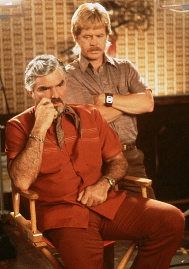
Choo-Choo!!!....That was the sound of the Fight Club/Boogie Nights Express leaving the station about two days into the poll (see Burt and William, above, pondering our choices). As you can see, even though we had the same number of people voting, there was more of a uniformity of opinion, at least until you reach #8 and higher, there's a bejezus amount of movies hovering at the 11, 10, and 9 point mark. As you can see, the Coen brothers kicked some bootie again, this time scoring two movies in the Top 10. So what does everyone think about the canon? What does it say about the Milk Plus members and readers who voted, you know, besides having a kick ass taste in film? (I actually like this list better than our last on). Also, if anyone wants to share their honorable mentions, who hasn't already, go right ahead.

And if you missed out on the voting, feel free to share your own top ten list in this comments thread.


Sunday, October 19, 2003
 

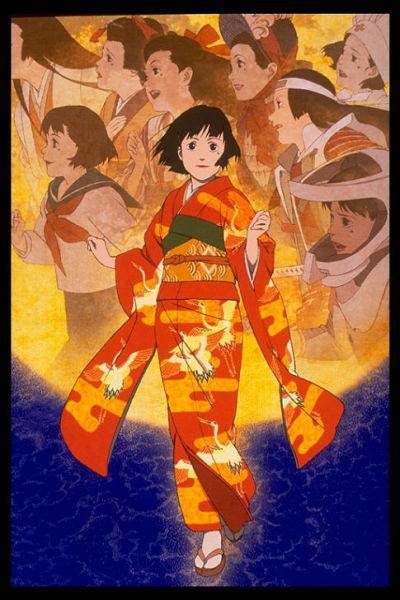
Millennium Actress


I almost did not go to Satoshi Kon’s masterful animated film Millennium Actress. When I first heard on Thursday that the film was being screened here this week, I made the decision not to go; other than Hiyao Miyazaki, I’m just not a big fan of Japanese animation, though I’ve seen plenty of anime on television and on DVD/VHS. However, I changed my mind after an AIM conversation with Phyrephox on Friday night, and I’m glad that I went, as Millennium Actress has taken it’s place as my second favorite movie of 2003 (I guess it’s being released on DVD sometime within the next week or two for anyone who is interested).

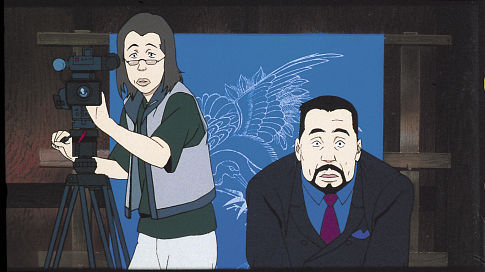
The film is about a pair of documentary filmmakers, the middle-aged Genya Tachibana and his much younger cameraman Kyoji, who have arranged to meet and interview a reclusive former film star from the golden era of Japanese cinema, Chiyoko Fujiwara, who mysteriously and abruptly retired from acting at the height of her career. This premise allows Kon to plunge the trio, as well as the audience, into Chiyoko’s memories, along the way erasing the boundary between factual, objective reality and subjective fantasy. All frames of reference are carefully swept away, the film, taking full advantage of the plastic space-time properties of animation, abruptly changes time periods (from 15th Century Japan to the present day, spanning almost every major period of Japanese history in the interim), and seamlessly switches locales, moving back and forth between the present, the “real life” events of Chiyoko’s past, and historical sequences which Chiyoko, and various other characters, inhabit as if it was a lived-in reality (for convenience sake, I’m going to refer to these scenes as “film-reality”). Of course the boundaries between all three are quite fluid, when the viewer becomes accustomed to one level of reality, the film switches gears, moving the events to another reality entirely. One quickly realizes that the central narrative thread of the film, Chiyoko’s never-ending search for a young artist/political radical that she fell in love with when she was 17 (though she never learned his name, or clearly saw his face, which is plunged into shadow every time he appears on screen, he gives her a key, which is a “key to the most important thing in the world”), is an archetypal cinematic narrative of undying, romantic love, and not only does it appear in the reality of Chiyoko’s life, but time after time, it appears in the film-reality sequences, across genres, from jidaigeki, to gendaigeki, from monster films, to science-fiction.

The film actually begins with what appears to be a science-fiction story, an as yet unnamed woman (Chiyoko) is boarding a rocket ship to look for “him” despite the protests of another man; the audience is given no frame of reference, but as the rocket prepares to blast off, Kon changes perspective, pulling back and allowing the audience to see that Genya is watching the footage on an editing table (later we learn that this is footage from Chiyoko’s last, unfinished film), the sound effects of the film mingling with the rumblings of a minor earthquake that hits at that very moment (earthquakes occur frequently in the film, marking major points of transition for the characters, adding an additional mythic quality to the narrative). This is one of many examples of the film reindexing events into another level of reality, in another, Chiyoko’s mother attempts to arrange a marriage for her daughter, who refuses the proposals, but then the scene morphs into a scene from a contemporary domestic melodrama, Chiyoko’s mother being replaced by Eiko, an older actress at the studio who shared the same dismissive attitude towards Chiyoko’s romantic notions as her real mother did (there’s another later scene, where it appears that Chiyoko is vacuuming her husband’s study, but it turns into a movie set). And it is more than a one way street, elements from the film-reality begin to appear in her reality, the most important being a ghostly old crone, who cursed Chiyoko in a film-reality jidaigeki to love her lord for a thousand years, and whose reflections begins to appear in Chiyoko’s normal reality, a haunting presence which continually reminds Chiyoko of her true love.

What makes the film even more interesting, is that both Genya and Kyoji begin to appear in the narrative, whether in the reality of the past, or the film-reality. At first, they stand back, observing the action from afar, like something of a chorus; Genya, who has proved to be a somewhat obsessive fan, invests so much of himself emotionally into whatever scene that he witnesses, whether reality or film-reality (in one scene, ostensibly from Chiyoko’s real life experience, she runs after a train, trying to see her love one final time, and a blubbering Genya confesses that he’s cried after watching this over fifty times), that he seems to find the entire thing natural (or at least, he’s nonplussed). Kyoji on the other hand, is totally bewildered by the experience. He provides much of the film’s comic relief, being quite ambivalent and befuddled by what is going on (if not downright sarcastic), not to mention terrified, in one scene the three of them move from the reality of 30s Manchuria, when Chiyoko’s train was attacked by bandits, to a burning feudal castle straight out of a jidaigeki, where Kyoji, still toting his HD camera, as he does throughout the film (in effect attempting to film memory) is almost dispatched by a volley of arrows, in a visual homage to the famous scene from Akira Kurosawa’s Throne of Blood.

Eventually, being a witness is not enough for Genya, and he begins to appear in both film-reality and reality, repeatedly casting himself in the role of Chiyoko’s savior or benefactor, no matter what era or place (in one funny moment, Genya, having fended off a company of samurai in a 15th century forest, drags himself through the streets of late Tokugawa Kyoto, and Kyoji dryly asserts that he is dressed wrong for the era). At first, these intrusions are interrupted by a return to reality, where it seems a game Genya was play acting with Chiyoko, but soon this pretense is completely dropped, and Genya’s interjections into the story become more frequent (though Genya does sometimes return to the act of observing, as when he angrily watches director Otaki’s cheesy attempts to seduce Genya in the late 40s). Genya’s own romantic fascination with Chiyoko, whom he idolizes and adores, is paralleled with Chiyoko’s own desire for her unknown love, and it too has a basis in reality, as Genya, in his youth, was an apprentice member of the Otaki Film Unit which produced all of Chiyoko’s films in the 1950s, so he was a witness to many of the same events. He even saved her life after an earthquake shook apart the set. This scene is particularly interesting because it is a reprise of the footage that opened the film (one of many reprises throughout the film, as there is a lot of narrative repetition), though this time it is Genya trying to talk Chiyoko out of piloting the rocket ship, and it is he who dejectedly watches Chiyoko from the control room before the film-reality breaks into reality, the earthquake intrudes, allowing Kon to again readjust the audiences perspective by revealing the film set. (I have to note that I loved how the film dissolved back and forth between the younger and older versions of characters, who even when the ages fluctuate, still resemble themselves much more than a live actor could accomplish; it was also interesting to note that the character of Chiyoko had three different actresses voice the part, one for each period of her life). It’s actually at this moment that Chiyoko leaves acting, when she sees the reflection of the old woman in visor of her helmet.
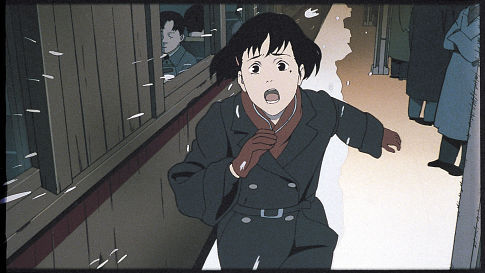
It’s actually the arrival of a former government agent, the man with the scarred face, who is first seen chasing the young activist through the snowy city streets (this scene is reprised almost exactly, but in the trappings of a samurai drama, and this time Genya intercedes, stopping him from killing Chikoyo, who is dressed as a geisha; the agent with the scarred faced reappears again and again, always as a nemesis, no matter what the time period, or whether the characters are in reality or film-reality) heralds the film’s most bravura sequence. He appears in the studio offices to beg Chikoyo’s forgiveness for what he did to her during the war, and he gives her a letter from the young radical, written during WWII, which sets her off on a quest to Hokkaido, to find her love, traveling hundreds of miles in a few minutes, a flurry of activity as Chikoyo , presented a complex set-piece of movement, sound, and color (Genya and Kyoji again reappear, sometimes shouting encouragement, other times, Genya directly assisting Chikoyo in her journey). In it’s most bizarre twist, the movement from Tokyo to Hokkaido transitions to the dusty-landscape of the moon (again, returning to the setting of Chikoyo’s final science fiction film), where an exhausted Chikoyo, followed by a distant Genya and Kyoji trudges to the young radical’s easel, where his painting of the Hokkaido snowscape rests (which then becomes animated itself) silently.

After the failure to find her love, Chikoyo returns to film, only to retire soon thereafter. Having lost her memento, the key, Chikoyo retires to seclusion. When the trio returns to the present, another earthquake hits, and Genya again throws himself over Chikoyo, though this time, he is not as successful. A dying Chikoyo is taken to the hospital, where she thanks Genya for bringing back the key and unlocking her beloved memories (and if anything, the film is a meditation on the nature of memory, how unreliable, yet wonderful it is, given how we conflate it with fantasy and strip it down into a cascade of images and sensations that is crafted into a sort of quasi-narrative). As Genya and Kyoji drive back to the city, a mournful Genya confesses that the government agent with the scar confided in him that he tortured the young artist to death during the war, but that he never told anyone that secret (though he told Chikoyo that she would finally find her love very soon). Back at the hospital, the elderly Chikoyo, breathing her last shallow breaths into an oxygen mask, transforms into the youthful Chikoyo, breathing in her space helmet, piloting her spaceship into the depths of space, happily declaring that it was the chase that always kept her going.

One last thing, I loved the animation. There is something to be said for traditional hand-drawn, two-dimensional animation (though the film does often use still drawings), even if they are animated at a slower frame rate than American animation. Some might find it quaint, and maybe I’m nostalgic, but I find a lot of recent American animation, most of which is done on computers now, to be artistically cookie-cutter. Here, you can see the artistry done in each frame. It’s quite simply amazing, and Satoshi Kon and his team of animators achieve spectacular results, in what is surely one of the most cinematic experiences I have had in a long, long time.

Thanks for the encouragement Phyrephox, maybe I’ll go to the next anime that is screening here in Madison, Tamala 2010, even if does feature talking cats.